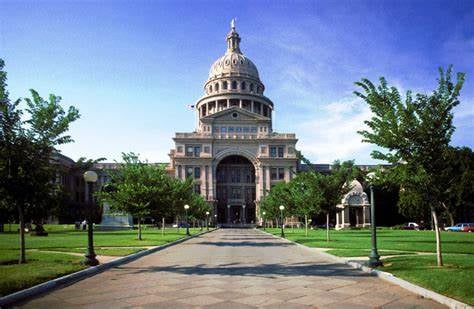
History and Architecture of the Texas State Capitol
The Texas State Capitol stands as one of the nation's most significant examples of 19th-century public architecture. Located at the intersection of Congress Avenue and 11th Street in downtown Austin, this magnificent building serves as the seat of government for the State of Texas [Source: en.wikipedia.org]. The current structure represents the fourth capitol building in Texas history, following earlier structures that served the Republic of Texas and the state after annexation.
The building was constructed between 1882 and 1888 under the direction of civil engineer Reuben Lindsay Walker, who oversaw every aspect of the ambitious project [Source: tspb.texas.gov]. The architects designed the capitol in the Italian Renaissance Revival style, creating a structure that would dominate the Austin skyline for generations to come. The exterior features distinctive pink granite quarried from Granite Mountain, located approximately 10 miles southwest of Austin in what is now Oak Hill [Source: en.wikipedia.org].
To transport the massive stone blocks, a dedicated 2.3-mile spur of the Austin and Northwestern Railroad was constructed specifically for the project. This railway line became known for occasional derailments where trains would accidentally dump pink granite along the tracks—many of these fallen rocks remain in place today and have become local points of interest for visitors exploring the area [Source: en.wikipedia.org]. The project employed approximately 900 workers, including 86 skilled granite cutters who were brought from Scotland specifically for their expertise [Source: en.wikipedia.org].
The cornerstone of the building was laid on March 2, 1885, which holds special significance as Texas Independence Day. The building officially opened to the public on April 21, 1888, coinciding with San Jacinto Day, which commemorates the decisive battle that secured Texas independence. The formal dedication ceremony was led by Texas State Senator Temple Houston on May 18, 1888 [Source: en.wikipedia.org].
Visiting the Texas State Capitol: What You Need to Know
Tourists and residents alike will find the Texas State Capitol complex to be one of Austin's premier destinations. The Capitol building itself reaches a height of 302.64 feet (92.24 meters), making it the sixth-tallest state capitol in the United States and notably taller than the United States Capitol in Washington, D.C. [Source: tspb.texas.gov]. The grounds surrounding the building span several acres and feature manicured lawns, historic monuments, and beautiful landscaping that reflects Texas's natural beauty.
Access to the Capitol building is through the main entrance on Congress Avenue, where visitors will pass through security screening before entering the grand rotunda. The ground floor houses the offices of the Governor of Texas and the Lieutenant Governor, while the House and Senate chambers are located on the second floor. Guided tours are available daily and provide in-depth information about the building's history, architecture, and the legislative process [Source: tspb.texas.gov].
The underground extension, completed in 1993 at a cost of approximately $75 million, added significant square footage to the complex without compromising the visual integrity of the historic building. This extension houses additional legislative offices and committee rooms [Source: en.wikipedia.org]. Visitors interested in the architectural evolution of the capitol can view exhibits detailing the various renovation projects, including the installation of central air conditioning in 1955 and the most recent refurbishments completed in 1997 [Source: en.wikipedia.org].
Texas State Capitol vs. Other State Capitols: A Comparison
When comparing the Texas State Capitol to other state capitols across the United States, several distinguishing features stand out. The following comparison table highlights key metrics and historical significance:
| Feature | Texas State Capitol | U.S. Capitol (Washington D.C.) | California State Capitol |
|---|---|---|---|
| Height | 302.64 ft (92.24 m) | 288 ft (88 m) | 121 ft (37 m) |
| Construction Period | 1882-1888 | 1793-1800 | 1861-1874 |
| Architectural Style | Italian Renaissance Revival | Neoclassical | Neoclassical |
| Primary Building Material | Pink Granite | White Marble | Sandstone & Marble |
| National Historic Landmark | Yes (1986) | Yes | Yes |
The Texas State Capitol was ranked 92nd in the 2007 "America's Favorite Architecture" poll commissioned by the American Institute of Architects, placing it among the most beloved public buildings in the nation [Source: en.wikipedia.org]. Its pink granite exterior makes it visually distinctive among state capitols, most of which feature white marble or limestone facades.
Nearby Attractions and Landmarks
The Texas State Capitol sits in the heart of downtown Austin, surrounded by numerous attractions and landmarks that visitors can easily combine into a single excursion. Just steps from the Capitol building, the 14th block of Congress Avenue features a vibrant stretch of shops, restaurants, and entertainment venues that showcase Austin's unique culture.
Heading north on Congress Avenue, visitors will encounter the Driskill Hotel, a historic landmark that dates back to 1886 and exemplifies Victorian-era architecture. The hotel is located at 604 Brazos Street and has hosted numerous dignitaries and celebrities throughout its history.继续南下,游客可以到达奥古斯塔·富兰克林·德拉诺运河(Augus Franklin Delano Canal)沿岸的伊莎贝拉广场(Isabella Square)和沃勒街(Waller Street)附近的历史悠久的商店和画廊。
For those arriving by car, Interstate 35 (I-35) runs through downtown Austin and provides easy access to the Capitol District via exits at 8th Street, 11th Street, and 15th Street. State Highway Loop 1 (MoPac Expressway) lies to the west of downtown, offering an alternative route from the northern suburbs. The Capitol grounds include several parking areas, though spaces can fill quickly during peak visiting hours and legislative sessions [Source: tspb.texas.gov].
The Texas State History Museum, located at 1800 Congress Avenue just north of the Capitol grounds, offers an excellent complement to a Capitol visit. The Bullock Texas State History Museum features interactive exhibits covering Texas history from pre-Columbian times through the modern era and is easily accessible via a short walk from the Capitol [Source: en.wikipedia.org].
Frequently Asked Questions about the Texas State Capitol
Is the Texas State Capitol open to the public?
Yes, the Texas State Capitol building is open to the public daily. Visitors can explore the building's public areas, including the rotunda, legislative chambers (when not in session), and various exhibit spaces. Security screening is required at the entrance. Operating hours typically run from early morning until late afternoon, though hours may vary during legislative sessions and holidays [Source: tspb.texas.gov].
Are guided tours available at the Texas State Capitol?
Complimentary guided tours are available throughout the day and are led by knowledgeable docents who provide detailed information about the building's history, architecture, and legislative functions. Tours typically last 30-45 minutes and cover the major public spaces including the rotunda, House and Senate chambers, and the Supreme Court Chamber. Group tours can be arranged in advance for parties of 10 or more [Source: tspb.texas.gov].
What is the significance of the Texas State Capitol being a National Historic Landmark?
The Texas State Capitol was added to the National Register of Historic Places in 1970 and subsequently designated as a National Historic Landmark in 1986 [Source: en.wikipedia.org]. This designation recognizes the building's exceptional significance in American history, architecture, and culture. As a National Historic Landmark, the Capitol receives special protections and preservation considerations that help ensure its preservation for future generations.
How was the Texas State Capitol originally funded?
The construction of the Capitol was funded through an article of the Texas State Constitution, adopted on February 15, 1876, which authorized the sale of public lands for this purpose. The primary contractors, known as the Capitol Syndicate (which included investors such as Fort Worth cattleman Charles Schreiner), were paid with more than three million acres of public land in the Texas Panhandle. This tract of land later became the XIT Ranch, which at its peak was the largest cattle ranch in the world. The combined value of the land and expenses totaled approximately $3.7 million for the original building [Source: en.wikipedia.org].
Can visitors observe legislative proceedings at the Capitol?
Both the Texas House of Representatives and the Texas Senate chambers are open to the public when the legislature is in session. The Texas Legislature meets annually for 140 days, typically beginning on the second Tuesday in January in odd-numbered years. During regular sessions, visitors can observe proceedings from the public galleries located above the chamber floors. It is advisable to check the legislative schedule in advance, as seating in the galleries can be limited during high-profile debates [Source: tspb.texas.gov].
What architectural features make the Texas State Capitol unique?
The Texas State Capitol's most distinctive architectural feature is its pink granite exterior, sourced from Granite Mountain near present-day Oak Hill, approximately 10 miles southwest of Austin. The Italian Renaissance Revival design includes a central dome, classical columns, and elaborate interior detailing. The rotunda features a stunning oculus and is surrounded by portraits of Texas governors and other notable figures. The building's height of 302.64 feet makes it one of the tallest state capitols in the country [Source: en.wikipedia.org].
What monuments and memorials are located on the Capitol grounds?
The Capitol grounds feature numerous monuments and memorials commemorating notable figures and events in Texas history. Visitors will find statues of historical figures including Sam Houston, Stephen F. Austin, and Barbara Jordan. The Soldiers and Sailors Monument honors Texas military personnel from various conflicts. The Texas Rangers monument commemorates the iconic law enforcement organization. Additional monuments continue to be added, reflecting the ongoing story of Texas and its people [Source: tspb.texas.gov].